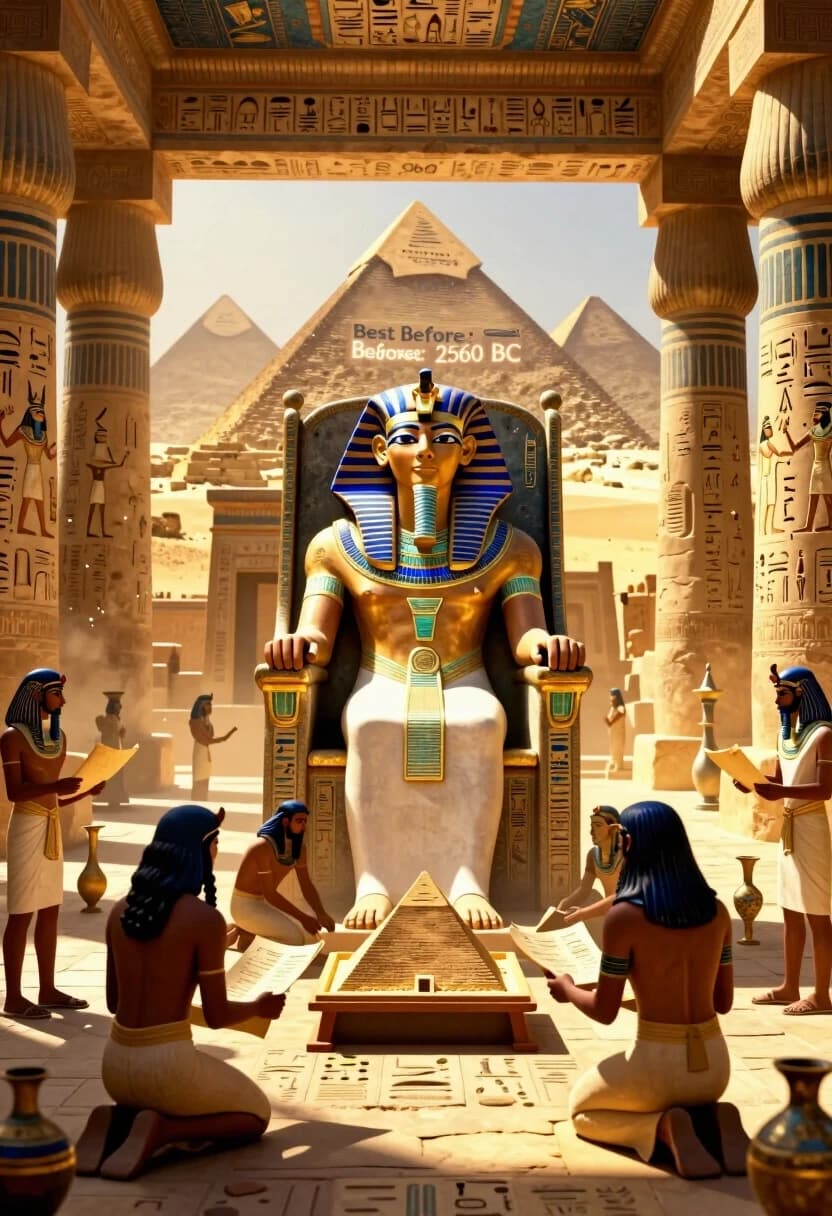
Photorealistic, 8K, cinematic lighting, ultra-detailed. Ancient Egypt, grand throne room of a pharaoh. In the center, a majestic pharaoh sits on a high-backed throne carved from dark stone and inlaid with gold and lapis lazuli; his headdress (nemes) is deep blue with gold accents, and his expression is dryly amused, almost bored. He rests one hand on the armrest, fingers slightly curled, as if he’s just delivered a witty remark. In front of him, a line of weary architects and overseers kneel or stand in humble postures, holding rolled papyrus scrolls and small clay models of pyramids. One of them presents a miniature model of the Great Pyramid of Giza on a wooden stand, as if offering it for approval. The pyramids themselves are visible through the open hall’s massive stone columns: three iconic pyramids in the distance under a hazy desert sky, with a subtle “expired” visual twist — the largest pyramid has a faint, semi-transparent overlay resembling a food expiration label: “Best Before: 2560 BC” in stylized hieroglyphs, rendered with a soft glow and slight distortion to keep the scene magical, not comical. The architecture is rich with fine details: intricate bas-reliefs on the walls showing gods and pharaohs, hieroglyphic inscriptions, ornate borders and patterns on the columns and floor tiles, small vases and ceremonial items scattered around. Sunlight streams through the high openings, casting dramatic golden beams and long shadows, highlighting dust motes in the air. Color palette: warm desert golds and sands contrasted with deep blues, greens, and rich browns of the stone and textiles. Atmosphere: grand, historical, slightly humorous but still majestic. No modern text or fonts; all textual elements must appear as stylized hieroglyphs or carved inscriptions. No logos, no UI elements.